How long is the average dinner cruise?
The average San Diego dinner cruise sails for 2.5 to 3 hours, but the real time commitment runs longer, from pier arrival to gangway. Here is the full timeline.
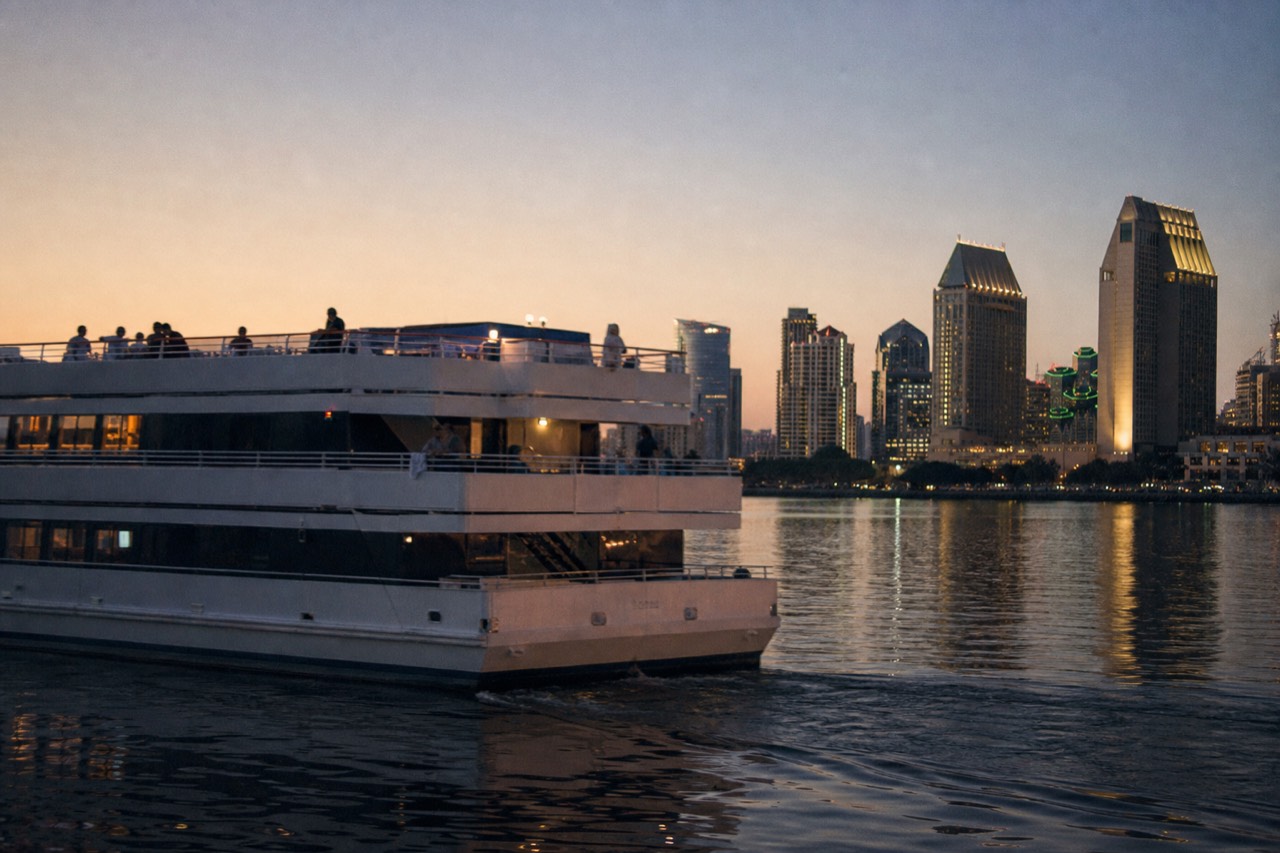
A dinner cruise in San Diego Bay sells itself on a number: 2.5 hours, 3 hours, sometimes 2 hours for a shorter sitting. That number is the sailing time, the clock that starts when the boat leaves the pier and stops when it returns. It is not the length of your evening. Between arriving at the pier, checking in, boarding early enough to get a good table, and walking back to your car after docking, the real commitment runs a solid hour past the advertised figure, sometimes more. This guide separates the two clocks and shows where the extra time goes.
How long is the average dinner cruise?
The average San Diego dinner cruise sails for 2.5 to 3 hours, with the City Cruises Gourmet Dinner Cruise at 2.5 hours, the City Cruises Buffet Dinner Cruise at 3 hours, and the Flagship Harbor Dinner Cruise at 3 hours (all checked September 2026). Add boarding and pier logistics and the full evening runs roughly four hours from arrival to sidewalk.
Those three figures come straight from the operators' own listings, and they line up with the broader pattern: dedicated dinner cruises in San Diego cluster tightly around the 2.5 to 3 hour mark, while daytime harbor tours run shorter, typically 1 to 2 hours. The reason is simple arithmetic. A three-course plated dinner for a full boat takes time to cook, plate and serve, and the operator wants the meal finished with enough daylight or skyline left for guests to spend money at the bar and stand on the outer decks. Compress the trip below two hours and the kitchen cannot keep up.
The sailing time also anchors the schedule around sunset rather than the meal. Most dinner departures are timed so the boat is on the water as the sun drops behind Point Loma, which in San Diego means departure times shift with the season. An evening Flagship departure on its 3-hour dinner cruise puts guests on deck for a summer sunset; the same sailing time in December catches a much earlier dusk.
If you are comparing options, the duration differences between the main dinner cruises are small but real. The table below shows what each operator advertises and where the evening actually starts and ends.
| Cruise | Advertised sailing time | Departure pier | Full evening estimate |
|---|---|---|---|
| City Cruises Gourmet Dinner Cruise | 2.5 hours (checked September 2026) | Grape Street Pier, 1800 N Harbor Drive | ~4 hours door to dock |
| City Cruises Buffet Dinner Cruise | 3 hours (checked September 2026) | Grape Street Pier, 1800 N Harbor Drive | ~4 hours door to dock |
| Flagship Harbor Dinner Cruise | 3 hours (checked September 2026) | Broadway Pier, 990 N Harbor Drive | ~4 hours door to dock |
The estimate column assumes a 15 to 30 minute early arrival for check-in and boarding, which is the standard recommendation from both major operators, plus a short walk back from the gangway. Anyone parking near the downtown piers should add a few more minutes for lots and meters.
What is the difference between sailing time and total time commitment?
Sailing time is the advertised window between departure and docking, the 2.5 to 3 hours printed on the listing. Total commitment adds 15 to 30 minutes of early arrival, check-in, boarding, and disembarking on the back end, so a 3-hour cruise becomes roughly a 4-hour evening, and a 2.5-hour sailing is not much shorter once the pier is counted.
The gap matters for planning the rest of your night. A 7:00 pm departure with a 30-minute early arrival means leaving your hotel or home by 6:15 at the latest, and you will not be back at the pier until 10:00 or a few minutes after, since disembarking a full boat is never instant. If you have reservations afterward, an 8:30 or 9:00 pm table is optimistic; a 10:30 drink elsewhere is realistic.
Check-in at the ticket booth is where most of the pre-boarding time goes. On dining cruises the booth issues boarding passes and confirms your menu selection, and photo ID is required, so have it ready rather than digging at the gangway. The operators recommend arriving earlier still if you need to park, since neither Grape Street Pier nor Broadway Pier has an operator-owned lot; both rely on public pay lots and metered street parking in the surrounding blocks.
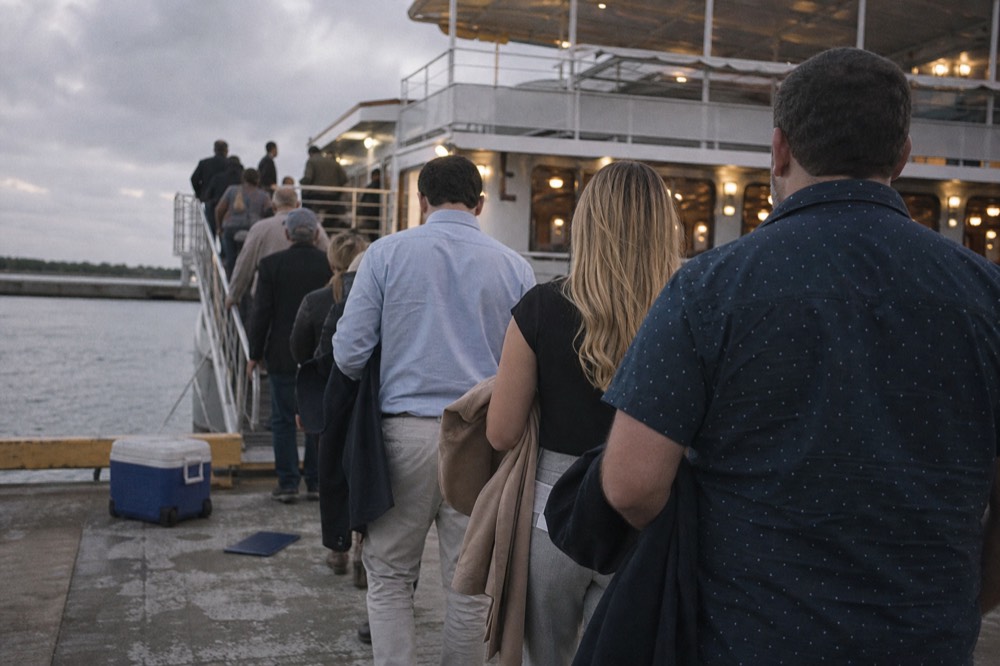
One structural note that surprises first-timers: your table is assigned at check-in or boarding, not chosen onboard. That is the real reason to be near the front of the line. Guests who board in the first wave get window-adjacent tables; guests who board last get whatever remains, on the same sailing, for the same price. The 30 minutes before departure is not dead time, it is the part of the evening that determines your view for the next three hours.
Why do dinner cruises run 2.5 to 3 hours?
Dinner cruises run 2.5 to 3 hours because a full seated meal for a large guest count takes about two hours to serve, and operators wrap the meal inside a sightseeing loop that adds another 30 to 60 minutes of skyline and sunset viewing.
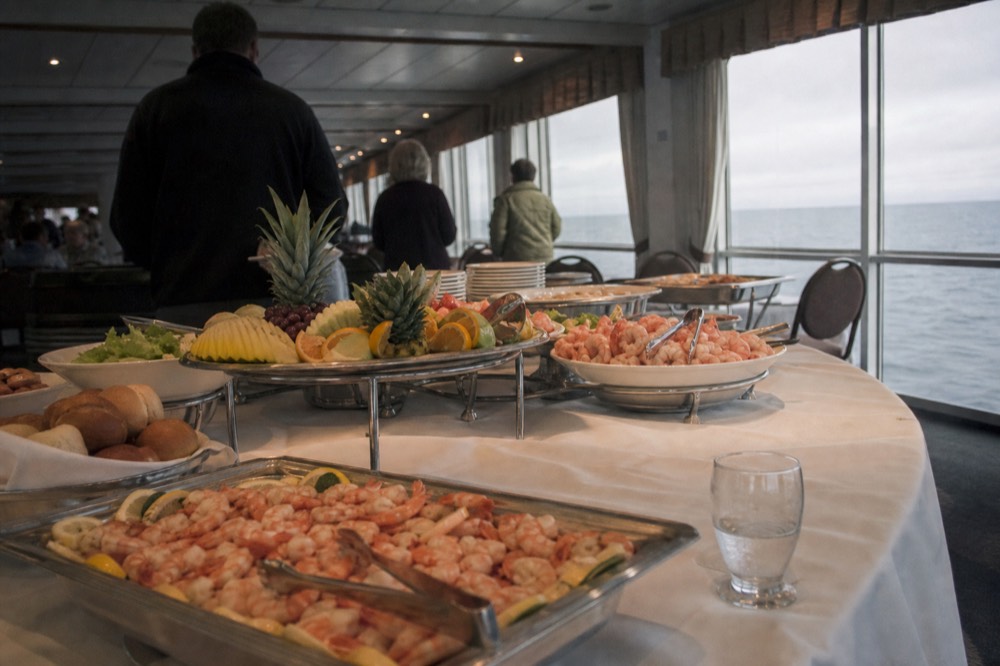
The meal is the fixed cost. A plated dinner served at your table, the format on the City Cruises Gourmet Dinner Cruise, arrives in courses, appetizer to entree to dessert, and a galley serving a full boat cannot rush it without the kitchen collapsing. A buffet, the format on the City Cruises Buffet Dinner Cruise, moves faster per guest but still needs a full service window plus a second wave for seconds and dessert. Below two hours, either format turns into a rushed cafeteria experience, and above three and a half, the marginal hour costs the operator fuel and crew overtime without adding much to the guest's plate.
The sightseeing loop is the variable. San Diego Bay is roughly 12 miles long and 1 to 3 miles wide, about 19 square miles of navigable water, which is enough room for a dinner boat to trace a route past the USS Midway Museum, the Coronado Bridge and the downtown skyline at a leisurely cruising speed. The standard dinner route is designed so the boat is mid-bay, not docked, when the sky does its best work. That is why the shorter 2.5-hour gourmet sailing and the longer 3-hour buffet sailing feel similar in structure: both spend the first hour on food, the middle stretch on the route, and the final stretch on dessert, music and the outer decks.
Live entertainment stretches the back end too. Most dinner cruises carry a DJ or live music with a dance floor, and the final stretch typically belongs to that rather than the meal. Cutting the sailing short would end the party before it starts, which is the part of the evening many guests remember more than the entree.
How long are shorter and longer alternatives?
Daytime harbor tours run 1 to 2 hours, brunch cruises about 2 hours, sunset sails 2 to 2.5 hours, and special-event sailings such as New Year's Eve run about 3 hours, so the dinner cruise sits at the long end of the public-cruise spectrum (all checked September 2026).
The short end belongs to sightseeing. The Flagship Harbor Cruise runs 1 to 2 hours depending on the option, from $37 per person (checked September 2026), and the Best of the Bay Harbor Tour runs 1.5 hours from $38.33 per person (checked September 2026). Neither serves a meal; both are pure deck time with narration. The Mission Bay Sunset Cruise compresses the sunset idea into 1 hour 15 minutes from $47 per person (checked September 2026), which works if you want the sky without the commitment of dinner.
The middle of the spectrum is the brunch and sail category. The City Cruises Buffet Brunch Cruise runs 2 hours from $99.64 per person (checked September 2026), and the sailing options, the Bay Sunset Sailing Experience at 2 hours from $89 per person (checked September 2026) and the Sunset Sailing Excursion with Drinks at 2.5 hours from $119 per person (checked September 2026), trade the dining room for a smaller boat with drinks included. Our piece on what is included in a sunset cruise breaks down that category in detail.
The long end is the special event. The New Year's Eve Champagne Cruise runs 3 hours from $600 per person (checked September 2026), with a hosted open premium bar, welcome champagne, a midnight toast and tray-passed bites rather than a plated dinner. Three hours is effectively the ceiling for public cruises in the bay; beyond that, you are looking at private charter territory, which our private dinner cruise guide covers separately.
How does the timeline of a dinner cruise evening actually break down?
A typical 3-hour dinner cruise evening breaks down as roughly 30 minutes of arrival and boarding, a quarter hour of departure and settling in, about an hour and a half for the meal, most of the final hour for sunset and deck time, and the last stretch to dock and disembark.
The first block, the one no advertisement mentions, is the pier. Arrive 15 to 30 minutes before departure, earlier if you are parking. Check in at the booth, collect your boarding pass, confirm the menu, and queue. Boarding itself is staggered, and the crew holds the gangway until everyone with a ticket is aboard, so the boat rarely leaves the pier at the exact minute printed on your confirmation.
Once underway, the first quarter hour is settling in: drinks orders, bread or appetizers, the safety orientation delivered over the PA. The meal then owns the next hour and a half. On a plated service the courses arrive sequentially; on a buffet guests are called to the line by deck or table section, which is why the buffet format can feel more rushed in the middle of the sailing even though the total time is the same.
The last hour is the payoff. Dessert lands, the DJ opens the dance floor, and the boat positions for the skyline after dark. This is also when the outer decks get crowded, since everyone wants the same photo of the Coronado Bridge lit up. Disembarking at the end is the reverse of boarding: the crew docks, ties off, and releases guests by deck, so give yourself a cushion of about 15 minutes from gangway to sidewalk.
For a fuller sense of whether that timeline justifies the price, our dinner cruise value breakdown walks through the math. And if you are still deciding between the plated and buffet formats, which have different paces despite similar durations, the City Cruises comparison guide lays out the differences.
Does cruise length change with the season?
No, the sailing time stays at 2.5 to 3 hours year-round; what changes with the season is the departure clock, since operators shift sailing times so the boat is on the water for sunset, which in San Diego ranges from roughly 5 pm in December to 8 pm in summer.
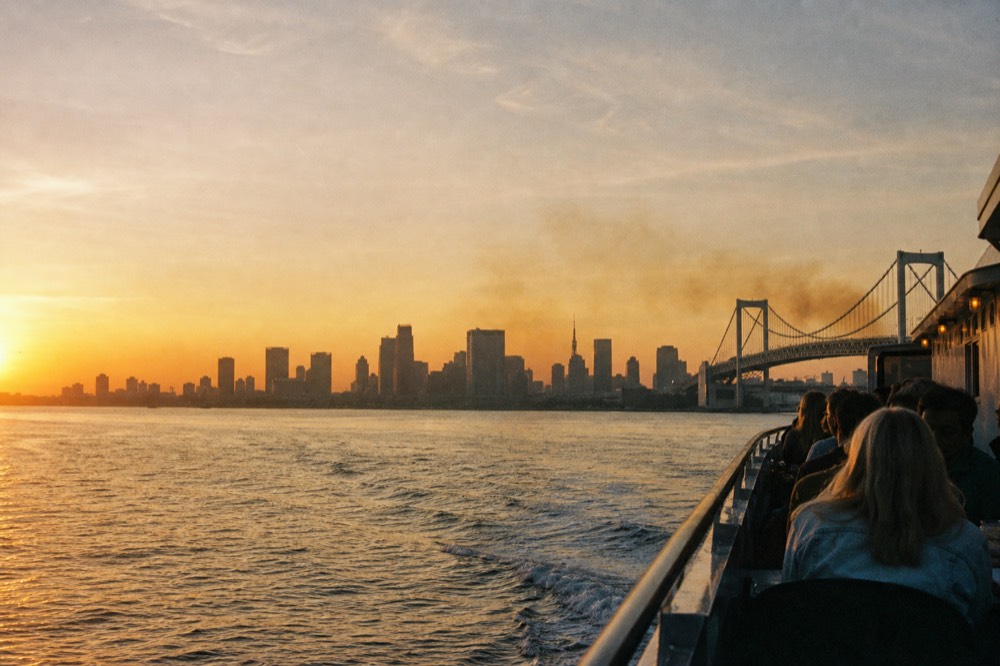
The seasonal shift matters more than most visitors expect. A summer departure at 7:00 or 7:30 pm catches golden hour mid-meal and a full sunset from the deck. The same sailing time in December means you board in the dark and the sunset happened before you left the pier, so operators move departures earlier in winter to keep the sunset segment of the route intact. If a sunset view is the point of the evening for you, check the departure time against the actual sunset time for your date before booking.
Weather barely changes the duration, but it changes the character of those hours. San Diego's marine layer is most persistent in May and June, the local "May Gray and June Gloom" pattern, and it typically burns off by late morning or early afternoon, which means an evening cruise in those months can sail under low cloud that hides the sunset but softens the skyline. December and January, counterintuitively, offer some of the clearest sunset viewing of the year thanks to a lower sun angle and cleaner skies. Fall Santa Ana winds can clear the air dramatically but make the outer decks breezy enough that you will want the layers operators recommend.
The other seasonal factor is demand, not duration. Holiday sailings such as the December Parade of Lights cruises and the July 4th Big Bay Boom fireworks trips keep the same sailing length but sell out far earlier, and the Flagship Harbor Dinner Cruise is flagged as often selling out even in normal weeks. Duration is fixed; availability is not.
How should you plan your evening around a 3-hour sailing?
Plan backwards from the docking time: for a 7:00 pm departure of a 3-hour cruise, arrive by 6:30, expect to be back on the pier around 10:00 plus a short disembarking cushion, and do not book anything else before 10:30. The sailing time is fixed; the pier time on both ends is what people forget to budget.
The backwards plan is the reliable one. Take the departure time, subtract 30 minutes for arrival and check-in, subtract your drive and parking buffer, and that is your leave-the-house time. On the other end, take the departure time, add the sailing time, add a cushion for disembarking, and that is the earliest you should schedule anything afterward. For the Flagship Harbor Dinner Cruise's 3-hour sailing (checked September 2026), that means arriving 30 minutes before your departure time and being free about three hours after it.
Parking deserves its own buffer downtown. Near Broadway Pier the options are metered street parking, free after 8 pm in some zones but capped at 3 hours before that, plus public lots such as the B Street Pier lot. Near Grape Street Pier there is no operator-owned lot, only public pay lots and meters in the surrounding blocks. On a busy summer Saturday, the walk from the far end of a public lot can add 10 minutes each way, which is exactly the margin people forget when they plan to arrive "right on time."
A few practical notes close out the timeline. Wheelchair access is limited on most vessels: boarding is often possible via ramp with staff assistance, but outer decks frequently require stairs, so call ahead if that affects your group. Alcohol service follows California law, 21 and over with ID, personal alcohol is not allowed onboard, and bar service can stop before docking. And if the duration itself is your constraint, a shorter alternative exists in the same family: the brunch cruise runs just 2 hours, and our San Diego brunch cruise guide covers it. For the classic evening, Dinner Cruises San Diego tracks the current schedules and prices across both major operators.
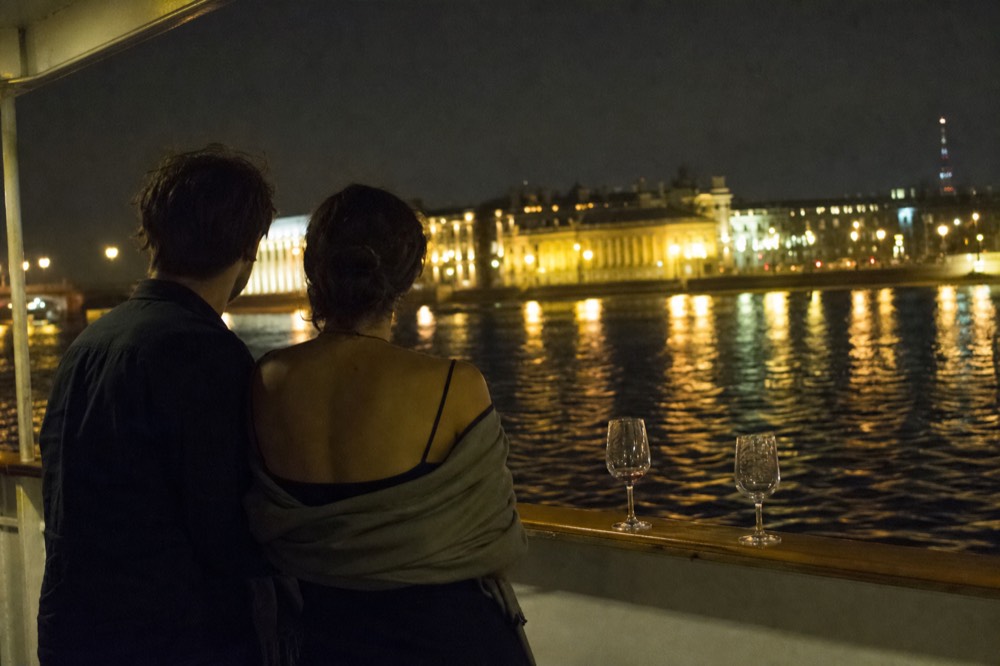
The honest summary: budget four hours for a three-hour cruise, arrive early for the table you want, and let the season set your departure time. The sailing length is the one part of a dinner cruise that operators have standardized, and it is standardized for a reason: it is exactly enough time for the meal, the route and the sky.
The average San Diego dinner cruise sails 2.5 to 3 hours, with the full evening running closer to four hours once arrival, boarding and disembarking are counted. The questions below cover the departure times, arrival windows and shorter alternatives in detail.
Common questions about dinner cruise length
How long is the average dinner cruise?
The average San Diego dinner cruise sails for 2.5 to 3 hours. The City Cruises Gourmet Dinner Cruise runs 2.5 hours, the City Cruises Buffet Dinner Cruise runs 3 hours, and the Flagship Harbor Dinner Cruise runs 3 hours (all checked September 2026).
What time do dinner cruises usually depart?
Most San Diego dinner cruises depart in the early evening, with Flagship's dinner cruise published at 7:30 pm (checked September 2026). Departure times shift with the seasons so the boat is on the water for sunset.
How early should I arrive for a dinner cruise?
Operators recommend boarding 15 to 30 minutes before departure, and arriving earlier still if you need to park. Check-in at the ticket booth requires photo ID and issues your boarding pass and menu confirmation.
Do dinner cruises run longer than 3 hours?
Public dinner cruises in San Diego Bay cap out around 3 hours. Longer evenings generally mean private charters rather than scheduled public sailings.
Does the cruise length change in winter?
No. The sailing time stays at 2.5 to 3 hours year-round, but departure times shift earlier in winter so the boat still catches the sunset, which comes much earlier in December than in summer.
Are shorter cruises available if 3 hours is too long?
Yes. Daytime harbor tours run 1 to 2 hours, the brunch cruise runs 2 hours, and sunset sails run 2 to 2.5 hours, all shorter than a full dinner cruise (checked September 2026).